Edition 012: Data as a Fiction
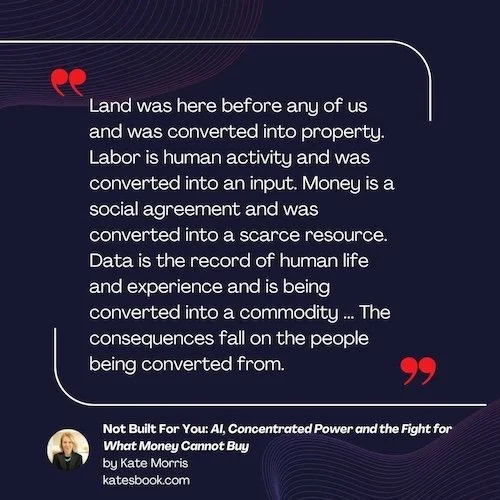
I think data is the fourth fictitious commodity. The market treats it as a product. The consequences fall on the people who produce it by being alive ... I disagree. Data is neither capital, nor a commodity. It is not something a corporation makes. It is something you make, by living ... The law currently divides what comes from a person into categories ... The categories were drawn by people who benefited from drawing them ... I watched part of the categorizing of data happen. Earlier in my career, many talented lawyers I knew flocked to the 'new' field of data privacy. My law partner, Charles, and I were doing something different ... The privacy field was not really about privacy. It was about compliance ... Privacy is what keeps the individual an individual at all ... The compliance industry did not protect that fence because the legislature did not ... A 'data subject' is what a person becomes when the framework gets through with them ... And this is what is legal and what is required. When I do data privacy work, this is what I do. This is what every lawyer does ... It was the orderly negotiation of how much of a person the corporation could take and still call itself compliant ... All of it is data. The immutable part and the lived part together are what a person is ... The fiction is in place. The category has been drawn. The framework has done its work. What it has not done is sever the thing the framework was built to take from the person it was taken from.
Edition 011: The Market as a Design Choice
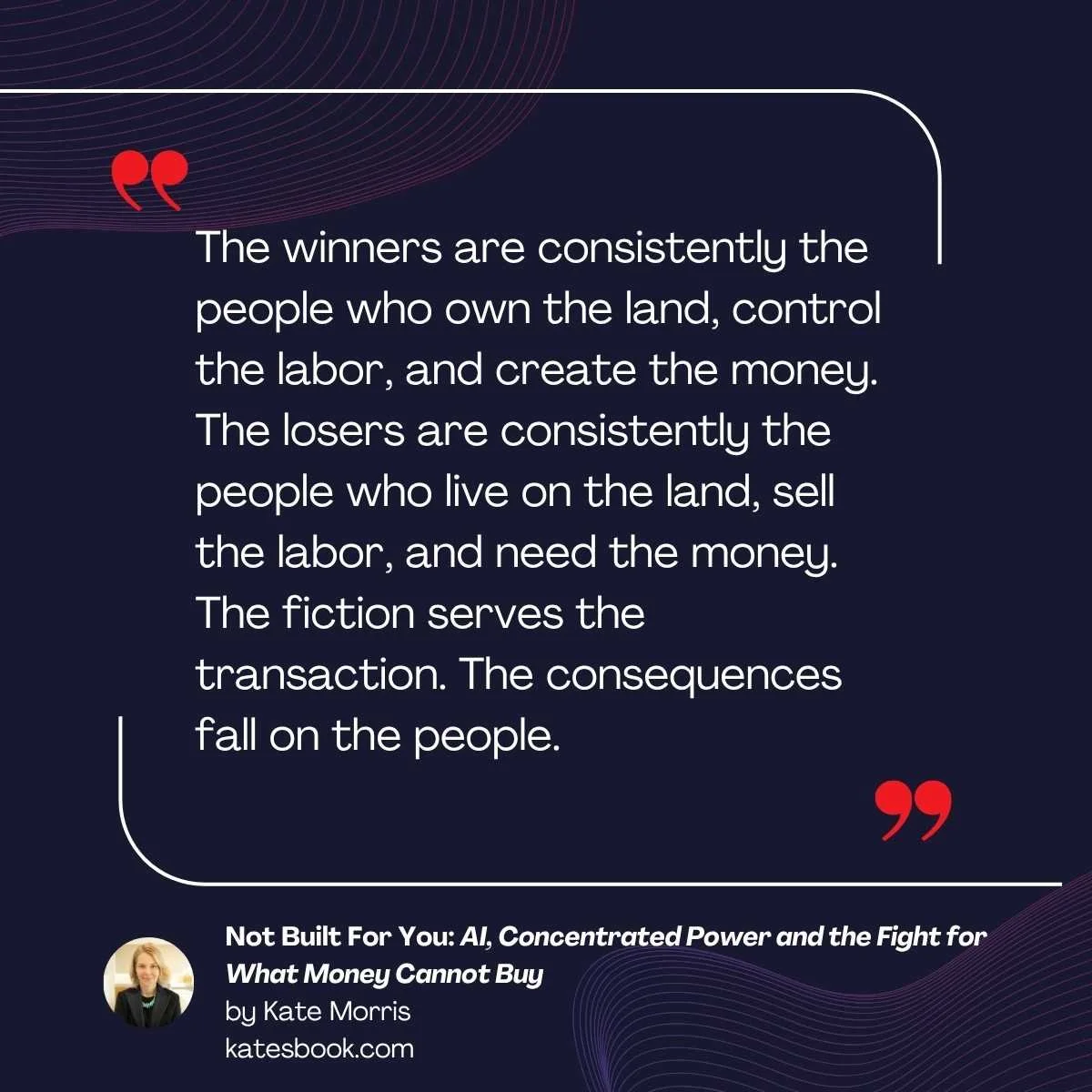
When you fill your gas tank, buy groceries, look for a job, or scroll through your phone, you are participating in markets. We are all told that markets are efficient ... What we are not told is that the system was built on fictions. Not lies, exactly. Fictions. Things the system treats as true because it needs them to be true, even though they are not ... The market is a design choice. It was built by people, for purposes, under conditions, and it can be built differently ... Karl Polanyi, an economic historian writing in 1944 ... identified three things the market treats as ordinary products that are not products at all: land, labor and money ... Land was here before any of us. It doesn't truly belong to anyone. And yet the market treats it as a product ... Labor is human activity. It's your time. The hours of your life that you exchange for a paycheck ... Wage is not a reflection of what a human being is worth ... It is the minimum the market can get away with giving you depending on how desperate you are ... Money feels like the most obviously real thing in daily life — you either have it or you do not — but money itself is a fiction ... The winners are consistently the people who own the land, control the labor, and create the money. The losers are consistently the people who live on the land, sell the labor, and need the money. The fiction serves the transaction. The consequences fall on the people.